
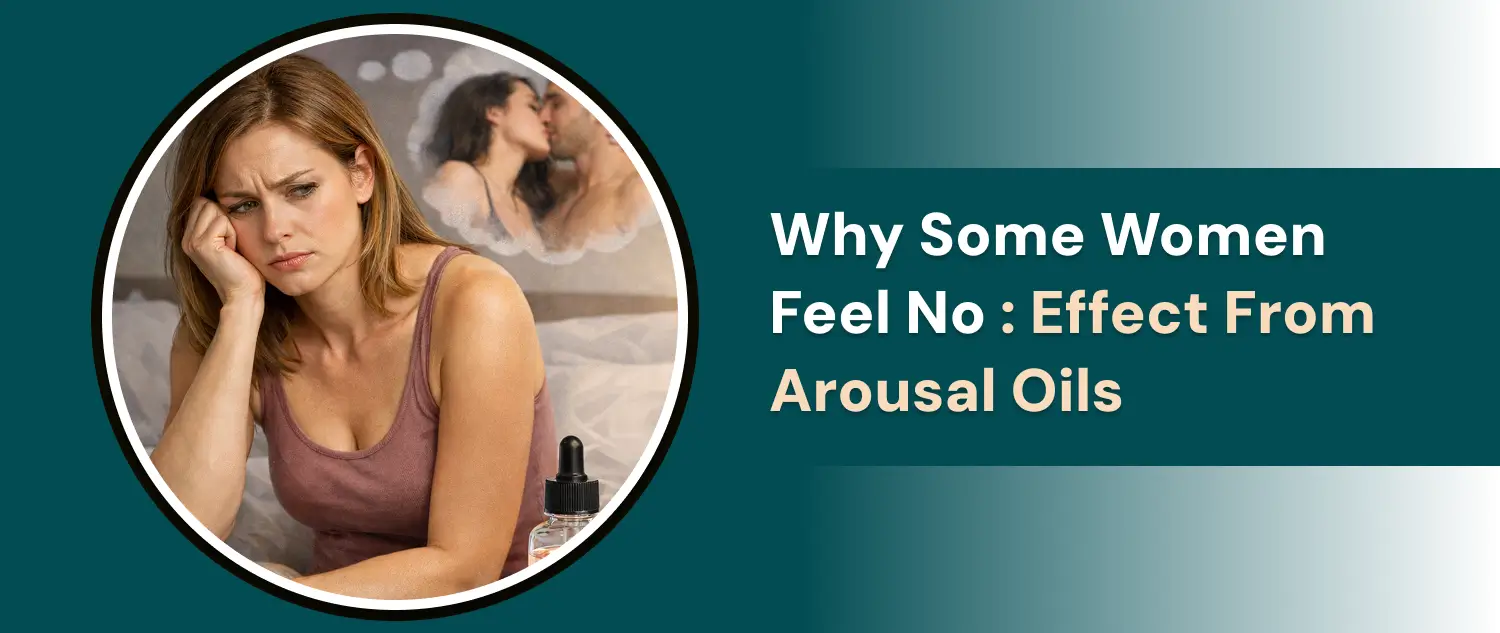
Arousal oils are often marketed as fast-acting solutions for low desire, reduced sensitivity, or difficulty getting in the mood. Many women try them with genuine hope. Some report warmth, tingling, and heightened sensation within minutes. Others feel almost nothing. That contrast leads to confusion and doubt. If a product claims to increase blood flow and sensitivity, why does it work for some and not for others?
The answer is rarely simple. Sexual response in women is shaped by biology, psychology, relationship dynamics, hormones, and expectations. A topical oil can influence certain physical pathways, but it cannot override the full system. When women feel no effect from arousal oils, the reason often lies in one or more of these deeper layers.
The Difference Between Physical Arousal and Desire
Many people assume arousal and desire are the same. They are not. Physical arousal refers to measurable body responses such as increased blood flow, lubrication, swelling of the clitoral tissues, and heightened nerve sensitivity. Desire refers to the mental and emotional interest in sexual activity.
Arousal oils are designed to target the physical side. They typically contain ingredients that stimulate nerve endings or promote vasodilation, which increases blood flow to the applied area. If a woman’s main challenge is psychological disinterest, stress, or emotional disconnect, a topical product may not produce noticeable results.
In such cases, the body may respond slightly, but the brain does not interpret the signals as pleasurable or exciting. Without mental engagement, physical sensations can feel neutral or even irritating rather than arousing.
Hormonal Factors That Limit Response
Hormones play a central role in sexual function. Estrogen supports vaginal lubrication and tissue health. Testosterone, even in small amounts in women, contributes to libido and sexual motivation. When hormone levels shift, sensitivity can change.
Women in perimenopause or menopause often experience thinning vaginal tissues and reduced natural lubrication. Blood flow responses may be slower or weaker. An arousal oil might create surface warmth, but if underlying tissue responsiveness is reduced due to low estrogen, the effect may feel minimal.
Similarly, women taking hormonal birth control or certain antidepressants may notice decreased libido or muted physical response. These medications can alter neurotransmitters and hormone levels in ways that dampen sexual sensitivity. In these cases, the oil is not faulty. It is simply working against a larger physiological shift.
Circulation and Nerve Sensitivity Differences
Arousal oils often rely on increasing blood flow and stimulating nerve endings. However, baseline circulation and nerve sensitivity vary from person to person. Some women naturally have high clitoral sensitivity and respond strongly to minor stimulation. Others require more sustained or deeper stimulation to notice a difference.
If a woman has reduced nerve sensitivity due to medical conditions such as diabetes or pelvic nerve damage, a mild topical stimulant may not create noticeable changes. The same applies to women who have developed tolerance to strong sensations over time. For example, frequent use of high-intensity vibrators can reduce sensitivity temporarily, making subtler stimulation less impactful.
The oil may still be increasing blood flow, but the subjective experience feels unchanged.
Stress and the Nervous System
Sexual arousal depends on the parasympathetic nervous system, which supports relaxation and openness. Chronic stress activates the sympathetic nervous system, often called the fight or flight response. When this system is dominant, the body prioritizes survival functions, not pleasure.
If a woman applies an arousal oil while feeling anxious, rushed, or emotionally distracted, her body may not fully shift into a receptive state. The oil may create warmth, but the nervous system is not in a position to process that warmth as erotic stimulation.
Mental load also plays a role. Women who carry heavy cognitive responsibilities throughout the day often struggle to transition quickly into sexual readiness. A topical product cannot instantly switch the brain from task mode to intimacy mode.
Relationship and Emotional Context
Sexual response is relational for many women. Emotional safety, trust, and connection significantly influence physical arousal. If there is unresolved tension, resentment, or communication issues with a partner, the body may not respond even if physical stimulation is present.
In such situations, an arousal oil might be applied with hope that it will solve a deeper disconnect. When it does not, disappointment follows. The issue was never purely physical. It involved emotional alignment, which no topical formula can fix.
Expectations and the Placebo Effect
Marketing language around arousal oils can create high expectations. Words like instant, intense, or explosive shape mental anticipation. When the actual sensation is mild warmth or tingling, some women interpret that as failure.
Expectation strongly shapes perception. If someone expects dramatic change and experiences moderate enhancement, she may label it ineffective. On the other hand, women who approach the product with curiosity rather than pressure may notice subtle improvements in sensitivity and interpret them positively.
The placebo effect also works in reverse. Doubt and skepticism can reduce perceived effectiveness. If someone believes the oil probably will not work, she may pay less attention to subtle shifts in sensation.
Incorrect Application or Usage
Sometimes the issue is practical. Arousal oils require proper application and sufficient time to absorb. Applying too little product, washing it off too quickly, or expecting immediate peak effects can limit results.
Some oils are designed primarily for external clitoral stimulation. Applying them only to the labia or inner thighs may not produce the intended effect. Others need a few minutes of gentle touch to activate circulation. If applied passively without additional stimulation, the effect may feel underwhelming.
Reading instructions and allowing time for gradual onset can make a difference.
Medical Conditions and Pain Disorders
Conditions such as vulvodynia, pelvic floor dysfunction, or chronic pain disorders can alter how sensations are processed. For some women, heightened nerve stimulation may trigger discomfort rather than pleasure. In these cases, an arousal oil may feel irritating instead of stimulating.
Women with a history of trauma may also experience complex sensory responses. Physical stimulation can trigger emotional reactions that override pleasurable sensations. A topical product cannot address these deeper factors.
If persistent lack of response is accompanied by pain, dryness, or distress, medical consultation is important. Sexual health concerns often have treatable causes.
Quality and Ingredient Variability
Not all arousal oils are formulated equally. Some contain mild botanical extracts with subtle warming properties. Others include stronger vasodilators. Concentration levels vary widely.
A product with low potency may produce effects that are too subtle for certain users. Additionally, individual sensitivity to ingredients differs. An oil that creates intense tingling for one woman may barely register for another.
Patch testing and reviewing ingredient lists can help identify whether the formula aligns with personal sensitivity levels.
When Arousal Oils Can Be Helpful
Despite these limitations, arousal oils can be useful for many women. They may increase awareness of genital sensation, support lubrication, and enhance foreplay. They often work best as part of a broader approach that includes emotional connection, stress reduction, and open communication.
Women who understand that these products enhance rather than create desire tend to have more realistic experiences. The oil can amplify existing arousal signals, but it rarely generates desire in isolation.
A Balanced Perspective
Feeling no effect from an arousal oil does not mean something is wrong with the body. It also does not mean the product category is ineffective. It means sexual response is multifaceted.
Biology, hormones, mental state, relationship quality, expectations, and product formulation all interact. A topical solution addresses only one piece of that system. When the other pieces are aligned, results are more noticeable. When they are not, the effect may be minimal.
Women benefit from approaching sexual wellness with curiosity rather than pressure. If a product does not work, that information is useful. It points toward exploring other aspects such as hormonal balance, stress management, communication, or medical evaluation.
Sexual response is personal. Variation is normal. Understanding the broader context helps remove self doubt and supports healthier expectations around what arousal oils can realistically provide.